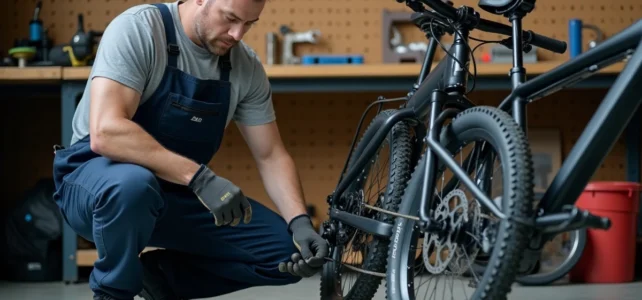
The Decathlon Rockrider E-ST 100 has a weight ranging from 21.7 kg (size S) to 21.9 kg (size L). This extra weight compared to a traditional mountain bike puts more strain on each electrical component, from the pedal sensor to the controller. When assistance cuts out while riding or the screen remains black, the actual issue is rarely where one might expect it to be.
This article reviews measurable causes of failure, distinguishes them by symptom, and offers a systematic diagnosis before any workshop intervention.
Oxidized connector or burnt controller: locating the true cause on the E-ST 100
On entry-level electric mountain bikes used in all weather, independent repair shops find that the majority of assistance cutouts come from oxidized connectors or poor contacts, rather than the motor or the controller. This observation, which has increased since the widespread use of e-bikes for daily commuting, radically changes the diagnostic approach.
The motor of the E-ST 100 is rarely the faulty part. A user who experiences a sudden cutout or jerky operation often suspects the motor or the controller. Feedback from specialized e-bike workshops (notably Pyrenea Vélo, with diagnostic sheets updated in 2023-2024) shows that a cutout while riding usually corresponds to a battery, connector, or pedal sensor issue.
This distinction is crucial: replacing a controller costs time and money, while cleaning a connector or tightening a cable can be done in a few minutes. Before suspecting an expensive component, one should systematically document the failures of the Rockrider E-ST 100, starting from the simplest to the most complex.
Symptom-based diagnosis: sorting table for the Rockrider electric mountain bike
E-bike repair shops have recommended since 2023 a “scenario sorting” approach before suspecting a faulty controller. The table below groups the most common symptoms of the E-ST 100, the probable cause ranked by frequency, and the verification to perform first.
| Observed symptom | Most common cause | Priority check |
|---|---|---|
| Assistance cuts out while riding | Oxidized connector or damaged cable | Visually inspect each connector, test continuity |
| Motor runs in jerks | Faulty pedal sensor | Clean the magnet and sensor, check spacing |
| Screen remains black at startup | Discharged or improperly clicked battery | Remove and reinsert the battery, test the charger on a different outlet |
| Error code displayed on screen | Depends on the code (see Decathlon manual) | Consult the error code table for the E-ST 100 |
| Significant loss of autonomy | Low tire pressure or aging battery | Check tire pressure, control the number of charge cycles |
This table does not cover all situations, but it helps eliminate simple causes before turning to a Decathlon workshop or an independent repairer.
Pedal sensor and battery: the two underestimated failure points
Pedal sensor of the Rockrider E-ST 100
The pedal sensor translates the rotation of the pedals into a signal for the controller. On the E-ST 100, a misalignment of the magnet by a few millimeters is enough to produce erratic operation. The typical symptom: assistance triggers with a delay, or it activates and then cuts out cyclically.
A misaligned pedal sensor perfectly mimics a controller failure. Before suspecting the electronics, three points must be checked:
- The cleanliness of the sensor area (mud, grease, metallic debris can disrupt the magnetic signal)
- The spacing between the magnet fixed on the crankset and the sensor itself (a visual check is sufficient to detect misalignment)
- The condition of the sensor cable along its entire length, looking for bends or cuts in the sheath
Battery: common false diagnostics
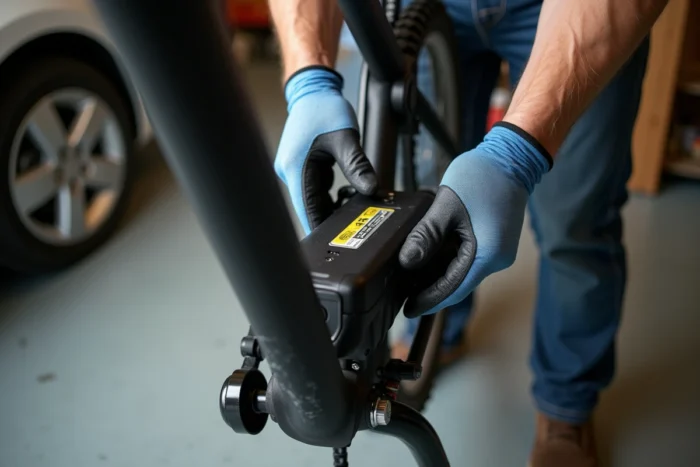
The battery of the E-ST 100 is housed in the frame. An incomplete click-in, even by a millimeter, interrupts the circuit and causes a black screen or random cutouts. This poor contact is the first thing to rule out.
Low tire pressure does not cause an electrical failure per se, but it measurably reduces autonomy. A user who notices a sudden loss of autonomy should check their tires before questioning the battery.
For the battery itself, a faulty charger can give the impression that the battery is dead. Test the charger on another electrical outlet, check that the charge indicator lights up, and that the output voltage matches the manufacturer’s specifications: these steps eliminate a common cause of misdiagnosis.
Vibrations and overheating of the controller: the specific case of the E-ST 100
Feedback from users in the Facebook group dedicated to the Rockrider E-ST 100 mentions vibrations accompanied by assistance cutouts, attributed to overheating of the controller. Attempts to cool the system do not always resolve the issue sustainably.
Controller overheating mainly occurs during prolonged climbs in hot weather. The motor of the E-ST 100 is an entry-level model with limited thermal dissipation. Riding in maximum assistance mode during a long climb pushes the controller into a temperature zone where thermal protection cuts off assistance for safety.
Two actions reduce this risk:
- Lower the assistance mode one notch before long climbs to limit the intensity demanded from the controller
- Take a break for a few minutes halfway up if assistance starts to cut out, allowing the temperature to drop
- Check that the area around the controller (usually in the down tube) is not obstructed by dried mud that prevents dissipation
If cutouts persist despite these precautions, the controller may have a material defect. In this case, a visit to a Decathlon workshop allows for a tool-assisted diagnosis and, if necessary, replacement under warranty.
The Rockrider E-ST 100 remains an electric mountain bike designed for occasional use on moderate terrain. Without assistance, pedaling becomes significantly more difficult due to the weight of the bike. Keeping connectors clean, monitoring the pedal sensor, and checking the battery click-in before each ride is enough to prevent the vast majority of failures reported by users.