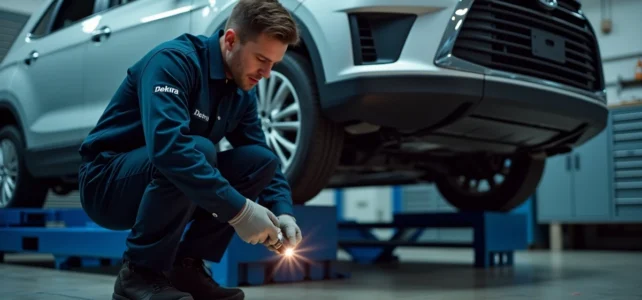
You receive the reminder letter, you type “Dekra” into the search engine, and there it is, surprise: two centers within ten kilometers show prices that are completely different. One charges for the technical inspection of a gasoline sedan well below the other, for a strictly identical regulatory service. Understanding where these discrepancies come from allows for a real choice, not just clicking on the first available slot.
Manufacturer Recalls and Dekra Technical Inspections: The Trap to Anticipate
Since January 1, 2026, a vehicle subject to an unaddressed “stop drive” recall can lead to a re-inspection for critical failure. In practical terms, we are no longer talking about a simple minor defect noted on the report: the vehicle can no longer be driven from midnight on the day of the inspection.
At Dekra, as elsewhere, the inspector has no choice. If the recall appears in the database and has not been carried out, the sanction is automatically applied. The problem is that many drivers are unaware that a recall concerns them.
Before booking a slot, it’s advisable to check on the manufacturer’s website or the government platform if our vehicle is affected. Manufacturer recalls are generally covered free of charge by the brand’s network. Spending ten minutes to verify this point can save you from paying for a technical inspection, then a re-inspection, and then having to immobilize the car while waiting for repairs.
To fully understand the prices of Dekra technical inspections and their logic, this prior verification is part of the actual budget to calculate.

Price Discrepancies Between Dekra Centers: What Really Explains Them
It is often said that technical inspections are more expensive in urban areas than in rural areas. This is generally true, but the reality is more nuanced. A Dekra center located on the outskirts of a large city may display a lower price than a center in an isolated town, simply because local competition is denser.
Each approved center freely sets its prices. The Dekra-Norisko network includes centers operated by independent franchisees. The name on the facade is the same, but the pricing policy depends on each operator.
Variables That Affect the Bill
- The type of vehicle: some centers apply a surcharge for vans, motorhomes, or LPG vehicles, while others include everything in a single package
- The geographical location and the rent of the premises, which directly impact the displayed price
- Occasional promotional offers (online discounts, promo codes, weekday slots) that can significantly reduce the bill
- The potential cost of a re-inspection, charged between ten and thirty euros depending on the centers, sometimes offered under conditions
Comparing only the price of the initial inspection without looking at the cost of the re-inspection is like comparing plane tickets without considering baggage fees. For an aging vehicle, the likelihood of needing a re-inspection is not negligible.
Old Vehicles at Dekra: The True Cost of Technical Inspections
The average age of vehicles inspected in France now reaches 13.3 years in 2025, compared to 12.6 years in 2023, according to L’Argus. This aging fleet changes the game for the technical inspection budget.
A vehicle over ten years old mechanically accumulates more potential failure points: corrosion of the undercarriage, play in the steering joints, wear of the brake discs, opacity of the headlights. The older the vehicle, the higher the risk of needing a re-inspection, and the total cost rises.
For this type of vehicle, simply looking for the cheapest Dekra center may not be the best strategy. A center that charges a slightly higher rate but offers a free re-inspection under conditions may end up being cheaper overall.
Preparing the Vehicle to Avoid Re-inspection
We are not talking about heavy mechanics here. Feedback varies on this point, but some common causes of re-inspection can be resolved in a few minutes:
- Replacing a burnt-out bulb (position light, license plate light) costs a few euros in self-service
- Checking tire pressure and the condition of the sidewalls, as a under-inflated or cracked tire is enough to trigger a defect
- Ensuring that the handbrake actually immobilizes the vehicle on a slope, a point that is regularly penalized
- Cleaning the front headlights if they are cloudy, so that the light beam passes the adjustment test
This home pre-check takes about twenty minutes and can prevent a re-inspection that, even if charged modestly, involves a second trip and a waste of time.
Electric and Hybrid Vehicles: Same Schedule, Different Inspection at Dekra
Electric and hybrid vehicles follow the same regulatory schedule as thermal vehicles: first technical inspection at four years, then every two years. However, the inspection points are adapted. No measurement of pollutant emissions, but specific checks on high-voltage components.
In terms of pricing, Dekra centers generally charge a price comparable to that of a gasoline vehicle. The absence of pollution control does not significantly reduce the duration of the visit, as the electrical checks compensate.
For owners of plug-in hybrids, one point deserves attention: the thermal engine, which is rarely used, may show anomalies at the time of inspection (weak 12 V battery, exhaust system corroded due to lack of use). Running the thermal engine on a trip of about thirty minutes before the appointment helps to bring the systems back to normal conditions.
The Dekra technical inspection budget is not limited to the amount displayed on the booking site. Between the manufacturer recalls to check in advance, the price discrepancies between franchised centers, and the risk of re-inspection on an aging vehicle, the actual bill depends as much on preparation as on the price of the slot.