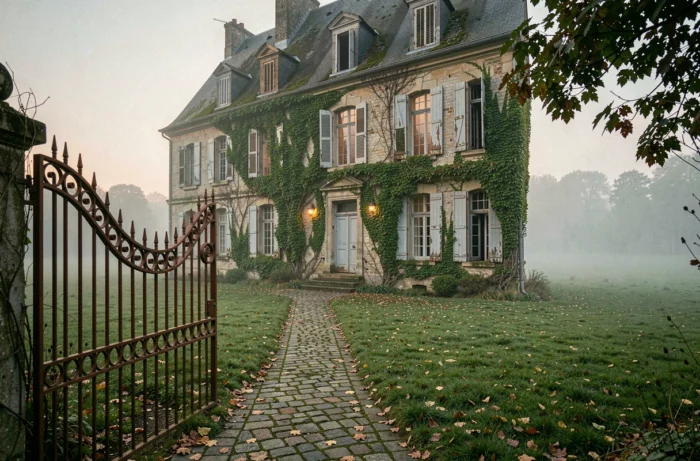
When you push open the door of a reputedly haunted castle, the first thing that strikes you is not a specter, but the dampness, the silence, and the smell of cold stone. Paranormal phenomena in France are rooted in very real places, often classified as historical monuments, where tragic history has fed ghost stories for centuries. Between local legends and structured tourist offerings, French haunted houses attract an increasingly broad audience.
Visiting a haunted place in France: what has changed on the ground
Just a few years ago, exploring a reputed paranormal site often resembled wild urban exploration: you would cross a fence, defy a no-entry sign, and film in the dark with a smartphone. That time is fading. Recent publications, notably those from Territoires de France (September 2026), explicitly remind us that one should not enter private properties or closed buildings without permission.
Several historical sites now offer night tour packages with reservations and house rules. Château de Fougeret, located in Vienne, serves as a reference point. You can book an overnight stay there under regulated conditions, with a welcome protocol. It is no longer a clandestine adventure; it is a guided experience, and that is precisely what allows legal access.
For those interested in the stories and investigations related to haunted houses, you can discover Paranormal News online and follow the news of these places throughout the seasons.
Château de Fougeret and the White Lady of Périgord: two concrete cases of documented haunting
Château de Fougeret appears in almost all sources as the most active haunted place in France. A private property open to visitors, it has accumulated testimonies of unexplained noises, moving objects, and physical sensations reported by groups of investigators. The paranormal in Dordogne has become a topic of national press, indicating that these legends now transcend local boundaries.
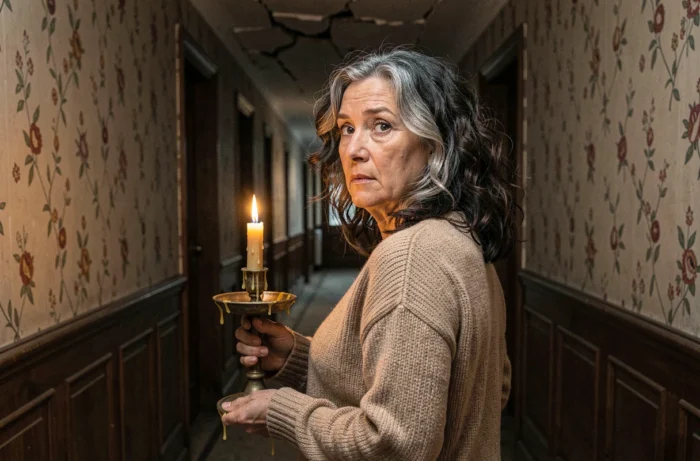
The White Lady of Puymartin, another Périgord castle, embodies a recurring archetype. According to local legend, Thérèse de Saint-Clar was walled up alive by her husband after infidelity. Her specter is said to still appear in the north tower. This type of story, blending historical domestic violence and spectral appearance, can be found in many French castles.
What distinguishes these two cases is their accessibility. You can visit Puymartin during the day like any other monument. Fougeret, on the other hand, offers overnight stays. In both situations, the legal framework is clear: you enter with a ticket and respect the owner’s instructions.
Paranormal phenomena in urban areas: Paris and the North
In Paris, the villa Frochot, built around 1839 in the Pigalle district, carries a persistent reputation. Behind its wrought iron gate, this neo-Gothic residence has been the scene of suspicious deaths, including that of a chambermaid murdered on the staircase. Singer Sylvie Vartan, who acquired the property, never moved in. Two owners are said to have died paralyzed in their beds. The villa was eventually exorcised.
In the North, legends take on a different hue. You encounter creatures from Flemish folklore, spectral appearances related to the region’s castles, and stories passed down through a vibrant oral tradition, distinct from the grand southern legends.
Farms and chapels: lesser-known places but equally charged
Large buildings are not the only ones involved. Isolated farms, country chapels, and even abandoned villages contribute to the French paranormal repertoire.
Paranormal tourism in France: between legends and structured offerings
The most significant shift in recent years concerns the professionalization of tourism related to haunted places. We no longer speak only of legends told by the fireside. Heritage and travel stakeholders offer complete arrangements:
- Night tours with fixed schedules, limited groups, and guidance by a guide or investigator
- Unusual accommodations in reputedly haunted castles, with reservation conditions and safety rules
This structuring changes the very nature of the experience. It shifts from a passive narrative (reading a ghost story) to an active practice (staying overnight, participating in an investigation vigil). Feedback varies on this point: some visitors describe unsettling sensations, while others leave without having perceived anything.
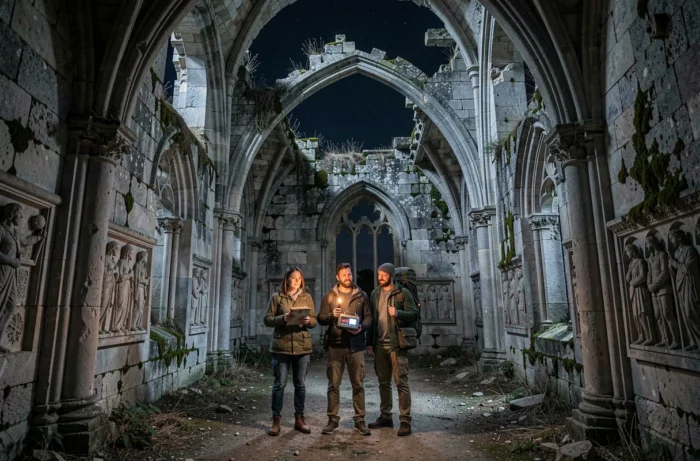
The glossary of “shadow tourism,” published by Voyage Interdit in 2026, reflects this upgrade. It distinguishes classic dark tourism (related to tragic historical events) from paranormal tourism focused on unexplained phenomena. France, with its dense built heritage and varied regional legends, offers a particularly rich ground for this type of offering.
The Black Périgord, Brittany (Brocéliande forest, Combourg castle linked to Chateaubriand), Normandy (Mortemer Abbey), and Hauts-de-France concentrate most of the accessible sites. Each region has its own spectral figures, its own stories, and its own ways of telling them. The paranormal in France remains primarily a matter of territory, rooted in geography and local memory much more than in generic folklore.