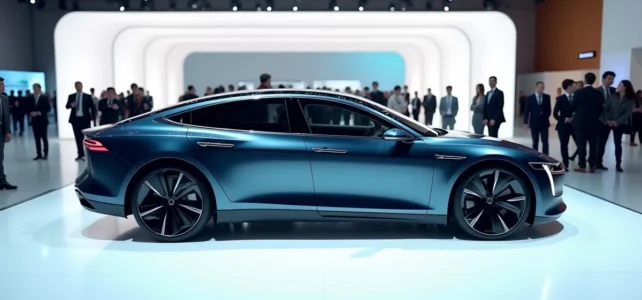
The French automotive market is undergoing a rapid transition. With game-changing regulations, a surprising slowdown in electric vehicles, and hybrid powertrains gaining ground, 2024 is reshaping what drivers can expect from a new vehicle.
GSR2 Standards: What Your Next Car Will Feature as Standard
Have you noticed a persistent beep when you exceed the speed limit while driving a recent vehicle? This system, known as intelligent speed assistant, is part of a set of features that became mandatory on all new vehicles sold in Europe as of July 7, 2024, under the GSR2 regulation.
Specifically, every new car registered after this date will include a black box recording driving data, automatic emergency braking, and a drowsiness detection system. These features were previously reserved for high-end trims. They are now standard, even on entry-level models.
To keep up with the latest automotive news on Actu Auto Buzz, these safety requirements represent a turning point: they alter the basic technical specifications of any vehicle, regardless of its price. An additional tightening (GSR2C) is planned for 2026, with enhanced requirements for automatic braking and cybersecurity for connected vehicles.
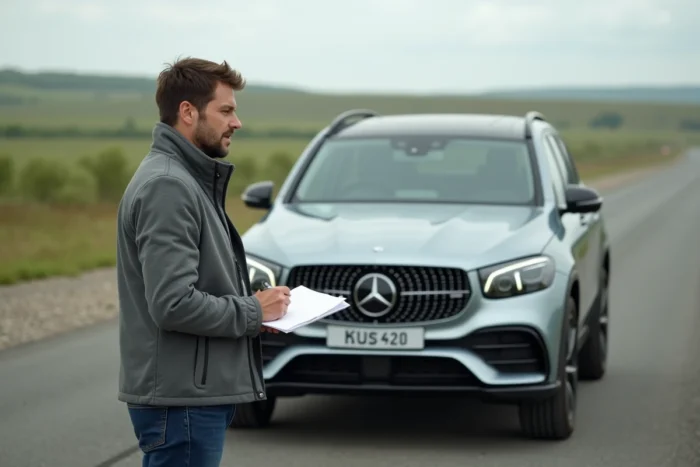
Market Share of Electric and Plug-in Hybrid Vehicles in 2024
The prevailing discourse suggested that electric cars would continue their upward trajectory without a hitch. The numbers tell a different story. According to the Ministry of Ecological Transition, the share of electric and plug-in hybrid vehicles is declining to 25.7% of the market in 2024, down from 26.2% the previous year.
This slight decline marks a pause in the electrification momentum. Several factors explain this slowdown:
- The reduction or suspension of certain purchase incentives that made the price of electric vehicles more accessible
- A wait-and-see approach from buyers in light of the rapid evolution of models and battery technologies
- The still high acquisition cost compared to an equivalent thermal or hybrid model
This slowdown does not indicate a rejection of electric vehicles. Rather, it reflects a gap between manufacturers’ offerings, increasingly focused on all-electric models, and the budgetary realities of households.
Hybrid and Thermal SUVs: Why They Still Dominate Sales
The SUV segment remains the best-selling in France, by far. This format appeals to both families and urban drivers, thanks to its elevated driving position and generous trunk space. Renault, Peugeot, and other French brands have understood this well by multiplying references in this category.
Hybrid powertrains (non-rechargeable) are capturing an increasing share of SUV sales. Why this choice? A conventional hybrid vehicle does not require a charging station. It consumes less than a purely thermal model in the city, without imposing the range constraints of an electric vehicle.
At Renault, the compact hybrid SUV has established itself as the core of the range. Peugeot offers a similar approach, with hybrid versions across nearly all its models. Mercedes also applies this technology to its compact SUVs, targeting customers who want to reduce their consumption without changing their habits.
The Used Market Benefits from This Transition
The influx of recent models in the used market, particularly electric vehicles returned after short-term rentals, is driving prices down in certain segments. Buying a recent used hybrid SUV is becoming a credible alternative to new, especially for drivers still uncertain about the type of powertrain.
Embedded Technologies: What Really Changes in Daily Life
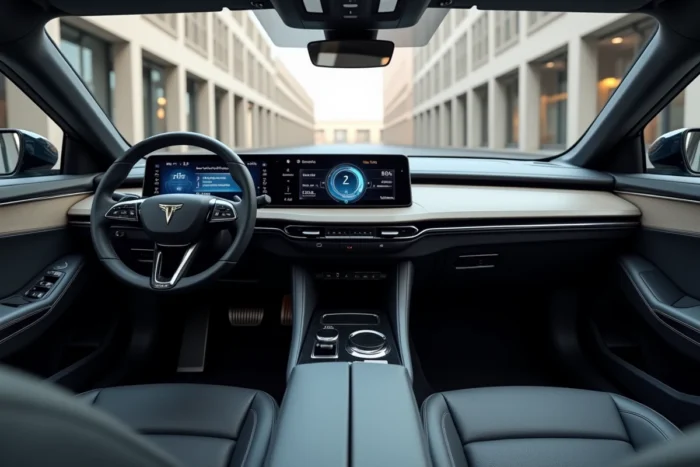
Beyond powertrains, the automotive innovations of 2024 also impact the onboard experience. Central screens are increasing in size, but it is primarily the software integration that is advancing. Over-the-air updates allow for vehicle improvements after purchase, a functionality borrowed from the smartphone world.
The vehicle’s connectivity also raises data protection concerns. Recent cars continuously collect information on driving, location, and mechanical status. The European cybersecurity regulation, which accompanies the tightening GSR2C planned for 2026, aims to regulate these practices.
Another concrete evolution: semi-autonomous driving aids. Lane keeping, adaptive cruise control, and automatic parking are no longer options reserved for premium sedans. They can be found on affordable models from Peugeot, Renault, or Asian manufacturers gaining visibility in the European market.
- Remote software updates to fix bugs or add functions
- Level 2 driving aids (the driver remains responsible, but the vehicle actively assists)
- Fully digital dashboards replacing analog gauges, including in entry-level models
Auto Innovations 2024: A Year of Transition Rather Than Disruption
The year 2024 will not be one of revolution, but rather of rebalancing between electric, hybrid, and thermal powertrains. Manufacturers are adjusting their strategies in response to a market that is not adopting electric vehicles as quickly as expected. The GSR2 safety standards raise the minimum equipment level, making every new vehicle safer by default.
For buyers, the choice of a model in 2024 depends less on the trendy powertrain and more on actual usage: daily mileage, access to a charging station, total budget including maintenance and insurance. The best automotive choice remains the one that fits your journeys, not a marketing trend.