Mr. Bricoleur is a French online media dedicated to home improvement, publishing practical guides covering everything from cutting concrete slabs to identifying pests in the home. Its news section aggregates regularly updated content on interior design, routine maintenance, and renovation projects accessible to individuals.
Legal framework for small DIY projects at home: limits to know before hiring a service provider
The distinction between a building craftsman and a provider of small DIY services known as handyman is based on a precise framework. Interventions classified as “personal services” must remain basic, occasional, and limited to 2 hours per intervention. Beyond that, the provider falls out of the SAP regime and enters the realm of craftsmanship, with different obligations regarding qualifications and insurance.
The annual spending cap qualifying for a 50% tax credit is set at 500 euros per tax household for this type of service. In practical terms, assembling a shelf, installing a curtain rod, or putting up a light fixture falls within this framework. Replacing an electrical panel or renovating a bathroom does not.
A receipt is mandatory from 25 euros including tax, and a written estimate becomes required for repair or maintenance work exceeding 150 euros including tax. These thresholds, reiterated by several specialized sources in August 2026, are often unknown to individuals who find practical information on Mr. Bricoleur or other DIY media without always verifying the status of the contacted provider.
DIY micro-enterprise: why the model is growing despite a declining market
The in-store DIY market is undergoing a contraction period. The semi-annual results for 2026 from the Mr. Bricolage chain show a 5.6% decline in revenue compared to the first half of 2025. At comparable stores in France, the drop is about 3.3%.
This trend is pushing brands to adapt their model towards local franchises and e-commerce. Meanwhile, the creation of micro-enterprises for small jobs is increasing. Guides published in 2026 detail the steps to start a DIY business as a self-employed person, indicating that the demand for home services remains strong even as in-store sales decline.
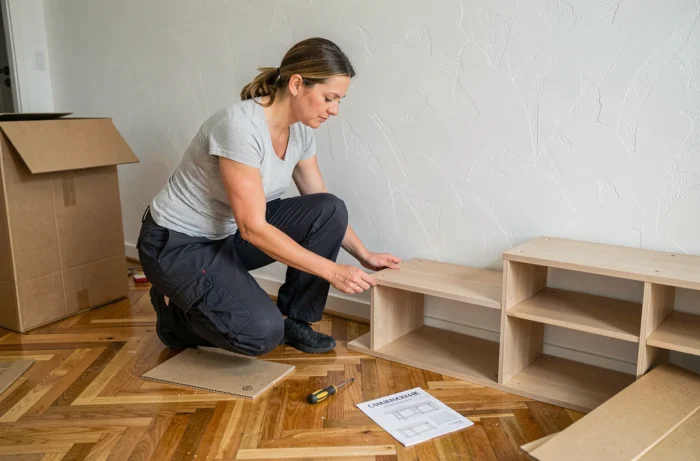
The explanation partly lies in the profile of clients: homeowners who prefer to delegate occasional tasks (furniture assembly, minor plumbing work, curtain installation) rather than invest in tools. The cost of a one-time intervention is often lower than purchasing specialized tools used only once.
Choosing a home handyman: technical criteria and common pitfalls
Finding a reliable provider for home projects requires checking several points before approving an intervention. The legal status of the handyman directly affects your rights in case of a problem.
- The provider must be registered (micro-enterprise or traditional business) and able to provide a SIRET number. An unregistered handyman exposes the individual to a lack of recourse and the loss of the tax credit.
- For work exceeding the scope of small DIY (plumbing, electricity, structural carpentry), a professional qualification or RGE label may be required, especially to access certain public aids.
- Customer reviews are a useful indicator as long as they are cross-checked: a profile with only maximum ratings and vague comments should be approached with caution.
- The estimate must detail the exact nature of the intervention, the estimated duration, the hourly or flat rate, and any travel expenses. An oral estimate has no legal value beyond 150 euros including tax.
The tightening of rules around RGE aid fraud, noted in 2026, reminds us that unchecked subcontracting remains a real risk in the home improvement sector. Verifying qualifications is not an administrative formality; it is protection against potentially costly defects.

Practical content from Mr. Bricoleur: what the news section covers
The Mr. Bricoleur site structures its publications around concrete issues that individuals encounter during their home projects. Recent topics include the real cost of a sea rush flooring, mistakes that damage brass during cleaning, and the technique for cutting a concrete slab in a straight line.
This problem-specific approach distinguishes the site from general catalogs. Each article targets a specific question rather than a broad category. An individual looking to identify a small pest in their home will find a visual recognition guide, not a generic list of pests.
The section also covers less expected topics such as stilt houses in France or local garage sale maps, broadening the editorial scope beyond pure technical DIY. The common thread remains housing and projects related to daily domestic life.
Home projects in 2026: balancing DIY and delegation
The question of whether to DIY or delegate varies depending on the type of work. For quick interventions (wall mounting, seal replacement, furniture assembly), DIY remains relevant as long as one has basic tools and a minimum of method.
For work involving plumbing, electricity, or structural aspects, hiring a qualified professional is not only recommended: it conditions the validity of home insurance in case of a claim. An electrical intervention that does not comply can lead to a denial of compensation by the insurer.
The choice also depends on the time-cost ratio. Assembling furniture that takes half a day for a beginner can be done in an hour by an experienced handyman charging a modest hourly rate. The apparent savings of “doing it yourself” evaporate when factoring in the time spent, assembly mistakes, and trips to the store to buy the right hardware.
The home DIY market continues to structure itself despite the decline in store sales. For individuals, vigilance focuses on the provider’s status and compliance with regulatory thresholds. A written estimate, a verifiable SIRET, and a time-limited intervention remain the three most reliable markers before entrusting home projects to a third party.