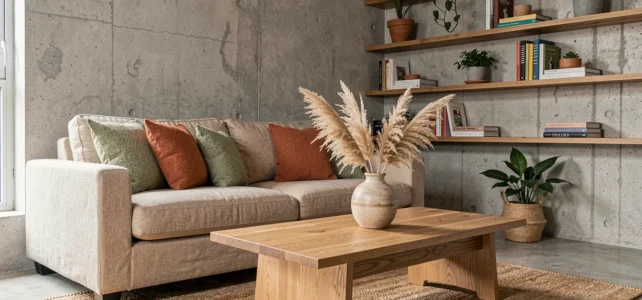
The dry garden and the flower meadow are no longer niche options. These two approaches now structure the majority of outdoor landscaping projects in France, driven by persistent water constraints. On the home front, furniture and accessories follow the same logic: sustainable materials, raw finishes, and tight color palettes. We take stock of the technical aspects that distinguish completed projects from mere trends.
Dry garden and resilient garden: substrates, mulches, and plant choices
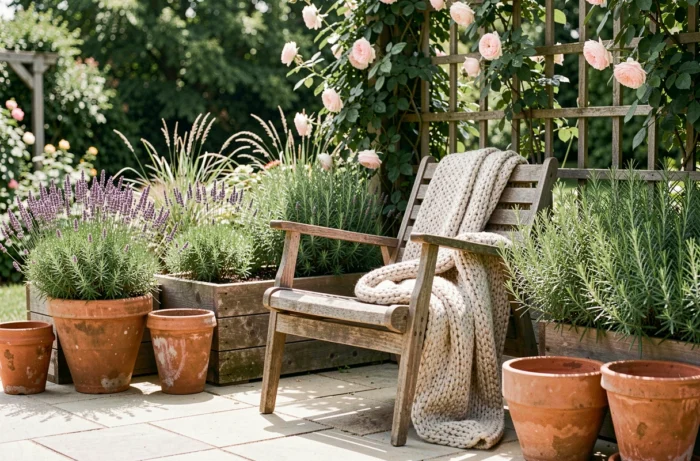
The dry garden is not a “low-maintenance” garden. It is a cultivation system based on a draining substrate, a calibrated mineral mulch, and a plant selection suited to low precipitation. According to La Passion du Paysage, the ecological garden, contemporary garden, and dry garden form the trio of the most requested styles in France in recent times, with a marked increase in the dry garden as a direct response to watering restrictions.
We recommend working the soil deeply before any planting. A draining substrate made of gravel and coarse sand prevents root stagnation, the primary cause of mortality in lavenders, cistus, and Mediterranean grasses. Mineral mulch (slate, pumice) is a better alternative to pine bark, which acidifies the soil and decomposes quickly.
The flower meadow, described as a key trend by landscapers, complements a dry garden by occupying transitional areas. It requires sowing on poor soil, without fertilizers, and only one late mowing per year. This protocol promotes biodiversity without additional water consumption.
Garden regulation 2026: green waste and water restrictions
Two legal constraints weigh on garden projects and deserve to be integrated from the design phase. By browsing recent articles on Ta Maison Ton Jardin, we regularly find these topics addressed from a practical angle.
The burning of green waste remains strictly prohibited throughout the territory. The fine can reach 750 euros for burning green waste, based on article R.541-78 of the Environmental Code. Composting or collection at a waste disposal site is the only legal route. In practice, this requires sizing a composting area from the landscaping plan or providing a shredder to reduce pruning volumes.
Watering restrictions, on the other hand, are tightening every summer in many departments. Prefectural orders limit or prohibit the watering of ornamental gardens during heightened vigilance periods. A garden designed around plants with low water needs is not only trendy, but it also complies with increasing regulatory constraints.
Sustainable outdoor furniture: materials and selection criteria
Plastic is clearly declining in garden furniture ranges. Landscapers and manufacturers are steering their collections towards long-lasting materials with reduced impact. Five families of materials are gaining ground to replace plastic pots and containers: artisanal terracotta, fiber-reinforced concrete, certified wood, recycled metal, and bio-based materials.
For table and seating furniture, we observe the same considerations. Here are the technical criteria to check before purchase:
- UV resistance and surface treatment: uncoated metal furniture will rust by the second season. Untreated class 3 wood (pine, spruce) will gray in a few months without varnish.
- Structural stability: extruded aluminum legs offer a better weight/strength ratio than folded steel, especially for large tables.
- Origin and certification: an FSC or PEFC label on wood, European provenance for metal, and Oeko-Tex certified outdoor textiles reduce the risk of harmful substances with prolonged contact.
- Actual maintenance: un-oiled teak requires less maintenance than oiled teak (which needs two applications per year). Wood-polymer composite only requires water cleaning but can heat up significantly in the sun.
Interior decoration: autumn-winter trends and material choices
The autumn-winter collections steer interior decoration towards enveloping textures and muted tones. La Redoute Intérieurs has unveiled its autumn-winter 2026-2027 collection, confirming the place of raw natural materials (washed linen, boucle wool, artisanal ceramics) in accessible ranges.
The Japanese minimalism, driven by renovation projects like the one documented in Montreal, influences furniture and accessory choices. Sleek lines, light wood, and integrated storage define this approach. It translates concretely into multifunctional pieces: benches with storage, modular tables, and wall shelves with invisible mounting.
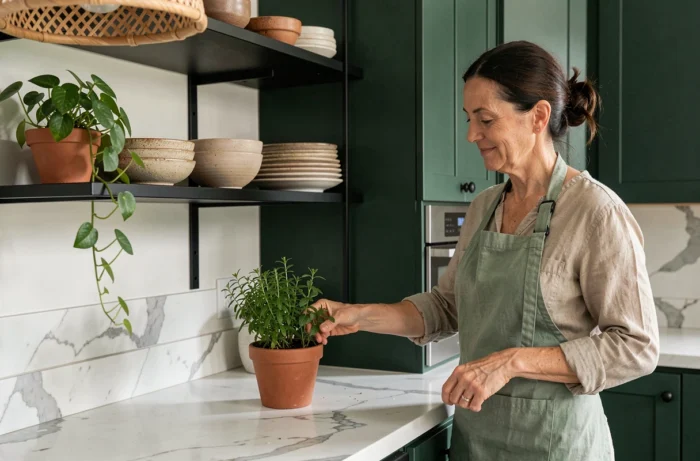
In terms of colors, the trend is moving away from the ubiquitous off-white of recent years. Earthy tones (ochre, terracotta, sage green) and matte finishes dominate the new ranges of paint and coverings. This chromatic shift is also reflected in table accessories: stoneware tableware, dyed linen tablecloths, and patinated brass candle holders.
Which accessories to prioritize for sustainable decoration
A durable decorative object meets three criteria: traceable raw material, artisanal or semi-industrial production in a short circuit, and timeless design that will not go out of style in two seasons. Artisan ceramics for the table, textiles made from undyed natural fibers, and certified solid wood furniture tick these three boxes.
Focusing on a few strong pieces rather than accumulating cheap accessories remains the best choice. A hand-turned stoneware vase, a woven rattan pendant light, or a framed mirror in aged oak structure an interior without requiring frequent renewal.
Home and garden trends converge towards the same principle: choose fewer products, but better designed and more suited to local constraints. Whether it’s a dry garden sized to withstand water restrictions or a living room furnished with sustainable materials, the logic of sustainability is no longer a marketing argument. It is a design constraint in its own right.