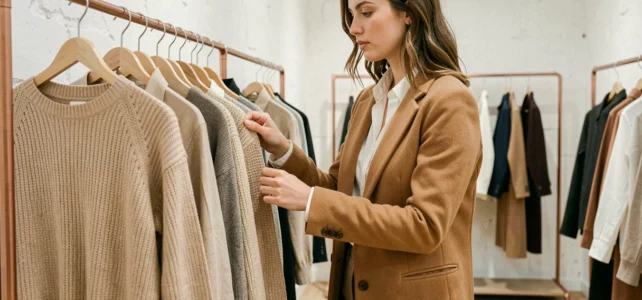
Building a personal style is not just about following fashion shows or replicating looks spotted on social media. In France, clothing habits are evolving due to economic, regulatory, and environmental factors that are reshaping how one composes their wardrobe.
Current fashion trends reflect this shift: second-hand shopping has established itself as a common purchasing channel, materials are being scrutinized more closely, and the textile digital passport is emerging in the European landscape.
Textile digital passport and ESPR regulation: what changes for your purchases
The European regulation ESPR (Ecodesign for Sustainable Products Regulation) provides for the gradual implementation of a digital passport for textile products. This system will require brands to make information about composition, production chain traceability, and repair or recycling instructions accessible via a QR code or chip.
For those looking to refine their style on a daily basis, this transparency alters the criteria for choice. A dress or a pair of jeans will no longer be judged solely on their cut or color, but also on the actual durability of their fibers and their resale or recycling potential.
Field reports vary on the exact timeline for implementation depending on product categories. The first obligations are expected to affect textile items in the coming years, but specific dates are still under discussion at the European level. This temporal uncertainty does not prevent some brands from getting ahead of the regulation by already displaying traceability data on their labels.
Several specialized publications document these clothing evolutions and their practical implications. Detailed analyses can be found in the fashion section on Les Carnets du Web, which covers both the key pieces of the season and the challenges of responsible consumption.

Second-hand and wardrobe: a stabilized market redefining style
Second-hand shopping is no longer a militant approach reserved for a few insiders. In France, the share of second-hand in textile consumption has been around 7 to 8% of volumes since 2024, according to data compiled by Refashion and several sector summaries from 2026. The growth, strong between 2023 and 2024, is now slowing down.
This plateau indicates that buying second-hand has become a sustainable budgetary reflex, fueled by declining purchasing power and rising prices for new items. Vinted has been identified as the leading clothing seller in France by volume in the first quarter of 2025, ahead of traditional retailers.
What this changes for creating a coherent look
Buying second-hand requires a different approach to building a style. You may not find the exact piece you are looking for at the right moment. The reflex changes: instead of starting from a trend to find the garment, you start from the available pieces to integrate them into an existing wardrobe.
This constraint encourages a better understanding of your own clothing needs. The colors that work with your complexion, the cuts suited to your silhouette, and the materials you can wear daily become more decisive selection filters than the latest trendy color.
- Check the fabric composition on the label before purchase, including second-hand, to avoid fibers that pill or deform after a few washes
- Favor pieces in neutral or complementary colors to those already in your wardrobe, rather than accumulating isolated favorites
- Examine the finishes (stitching, buttonholes, closures) that determine the actual longevity of the garment, whether new or second-hand
Colors and silhouette: balancing seasonal trends and personal coherence
Color trends change every season. Butter yellow, beige, and terracotta shades succeed one another throughout the collections. Following each color wave means constantly renewing pieces that will no longer work together six months later.
A more effective approach is to identify a palette of three to five colors that harmonize with each other and with your skin tone. You can then occasionally integrate a piece in the current color without disrupting the overall balance.
Body shape and cuts: a often overlooked criterion
Body shape remains a technical parameter that is underutilized. Competitors often discuss it theoretically (A, H, V shapes), but the practical issue lies in three details: the rise of pants or jeans, the length of sleeves, and the shoulder drop.
A high-waisted jean elongates the silhouette for some body shapes and shortens others. A jacket with a shoulder seam that drops too low gives an unintentional sloppy effect. These concrete adjustments have more impact on the final result than a choice of color or pattern.
- Systematically test two sizes for each new brand, as standards vary from one manufacturer to another
- Check the fit of the garment in motion (sitting, arms raised) and not just standing in front of the mirror
- Invest in basic alterations (hem, tapering) that cost little but transform the appearance of a standard piece
Textile care: the invisible factor of sustainable style
A well-thought-out wardrobe loses all coherence if the garments degrade after a few washes. The topic of care is rarely addressed in fashion trend articles, even though it directly affects the lifespan of pieces and thus the profitability of each clothing purchase.
Natural fibers (cotton, linen, wool) and synthetic fibers (polyester, elastane) do not react the same way to washing, drying, and ironing. Washing a wool sweater at high temperature irreversibly distorts it. Tumble drying jeans accelerates the loss of their dye.
The textile digital passport mentioned earlier should, in the long run, provide more precise care instructions than the current pictograms. In the meantime, reading the composition label remains the most cost-effective gesture to preserve the quality of your garments and maintain a polished style without constantly renewing your wardrobe.
Building a unique daily style relies less on accumulating trendy pieces than on concrete trade-offs: quality of materials, coherence of colors, and fitting of cuts to one’s body shape. The transparency tools entering the market, combined with the maturity of the second-hand market, provide consumers with new levers to make more informed clothing choices.