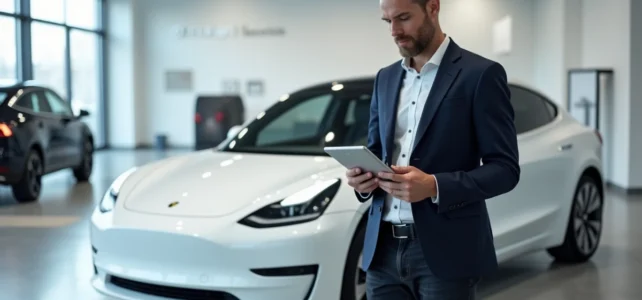
A fleet manager replacing their diesel vans with electric vans is not concerned with macro trends. They want to know if the battery will last through the route, how much the replacement will cost in five years, and if they will find a charging station in their area. It is from these very concrete constraints that the outlines of the electric vehicle market in 2026 are drawn.
Electric Vans: What the Field Reveals About Business Models
On paper, a 100% electric van reduces fuel and maintenance costs. In practice, the feedback on this point varies depending on the usage profile. A tradesperson making short trips in an urban area quickly recoups their investment. A delivery driver in a suburban area with heavy loads and constant elevation changes finds that the real autonomy is much lower than the manufacturer’s figures.
This discrepancy pushes professionals to rethink their routes, even resizing their delivery areas. Long-term rental offers that include battery maintenance are emerging, a clear signal that the business model is shifting from product to service.
Players closely monitoring these changes, such as the EV Mag business site, document this shift where profitability is no longer calculated solely by the kilometer but by the vehicle’s operational availability.
Used Electric Vehicle Market in France: Game-Changing Figures
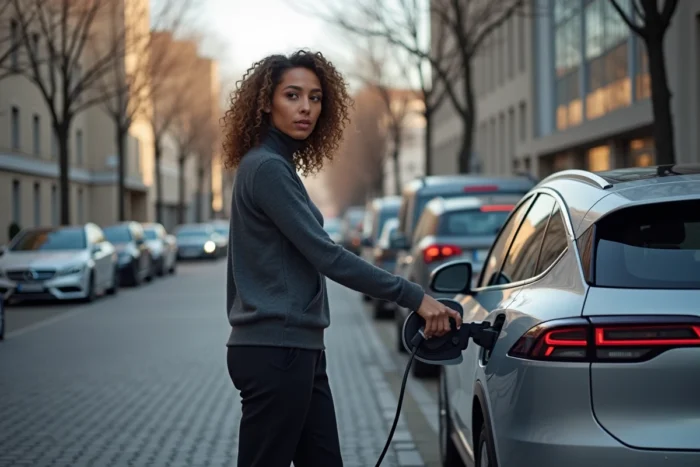
The new car segment attracts media attention, but it is the used market that is shaking up the sector. In the second quarter of 2026, the French market for used electric cars recorded 72,244 transactions, a 42% increase compared to the first quarter of 2026 according to the Avere-France barometer.
This surge reflects a concrete phenomenon: the first waves of electric vehicles purchased between 2020 and 2023 are coming to the end of their leases and feeding a structured used stock. For buyers, used electric vehicles are becoming the primary entry point into zero-emission mobility.
Battery Warranty and Refurbishment: New Trust Levers
The main concern in the used market remains battery degradation. Manufacturers and distribution networks respond with certified capacity diagnostics and specific warranty extensions. Some refurbishers offer to replace faulty modules rather than changing the entire pack, which reduces costs.
We are witnessing the emergence of a complete ecosystem around the second life of batteries: stationary storage, resale of tested cells, recycling channels. Every battery that comes out of a vehicle now generates a secondary value chain.
Electric Quadricycles: An Underestimated Business Segment
In 2025, 75% of quadricycle sales in France were electric. This figure, sourced from data relayed by Automobile Propre, positions this micro-segment as the most electrified in the French automotive market, far ahead of sedans or SUVs.
Specifically, we are talking about license-free vehicles used by three distinct profiles: young people in suburban areas, seniors with reduced mobility, and local fleets (last-mile delivery, municipal services). The associated business models differ radically from the traditional automotive market: micro-monthly subscriptions, sharing among neighbors via local platforms, integration into municipal fleets.
Why This Segment Interests Investors
The acquisition cost of an electric quadricycle remains significantly lower than that of a city car. The low entry price allows for high volumes with limited financial risk per unit. Local authorities are beginning to subsidize these vehicles as part of low-emission zones, accelerating adoption.

European Regulation 2026: The Shift That Redefines Manufacturers’ Strategies
The European regulatory trajectory has taken a turn that many observers did not anticipate. The Commission is no longer aiming for a total ban on thermal engines by 2035, but rather a target of less than 90% emissions with compensation mechanisms for the remaining 10%.
For automakers, this shift changes the investment calculation. Plug-in hybrids, which some considered a transitional technology destined to disappear, are finding a sustainable space in catalogs. Synthetic fuels (e-fuels) are gaining regulatory legitimacy.
- European manufacturers are relaunching plug-in hybrid programs expected to last beyond 2035, with dedicated R&D budgets
- Synthetic fuel producers are negotiating certification frameworks with the Commission to integrate compensation mechanisms
- Corporate fleets are revising their transition plans to include a mix of pure electric and plug-in hybrid according to usage
This relaxed regulation benefits manufacturers who did not bet exclusively on full electric. However, it penalizes those who had already abandoned their thermal and hybrid platforms.
Electric Vehicle Sales in Europe: The Dynamics of the First Half of 2026
Electric vehicle registrations in Europe showed marked growth in the first half of 2026. According to ACEA, the market share of 100% electric vehicles reached 20% in the first five months of the year, a historic level for the continent.
This acceleration can be explained by the convergence of several operational factors:
- The arrival of affordable electric models positioned below the psychological threshold of equivalent thermal city cars
- The tightening of ecological penalties in several countries, including France with the 2026 scale
- The development of the fast charging network on highways, which removes the main barrier for long-distance trips
- The competitive pressure from Chinese manufacturers, pushing European brands to lower their prices
The European electric vehicle market is no longer advancing solely due to subsidies. Price competitiveness is beginning to play an autonomous role in the purchasing decision. Manufacturers that are slow to offer accessible models are losing market share to well-established Chinese brands.
The question for the second half of 2026 is no longer about the market’s direction, but about how quickly traditional players can adapt their industrial tools. Those who anticipated the drop in battery costs and restructured their production lines are gaining a lead that is difficult to catch up with.